My son has been listening to more audiobooks since getting a job across town and needing something to occupy his mind on his commute. He recommended John Green’s The Anthropocene Reviewed, saying he connected more with it than with any book he’d read in years.
I decided to give it a try, choosing to listen to the audiobook as well since it was read by the author.
John Green is closer to my age than my son’s age and although my son and I are both big readers there aren’t many authors we both like. John Green is one. Rainbow Rowell is another.
I didn’t deeply connect with this book the way my son did, but I still enjoyed it quite a bit. A departure from Green’s fiction, this is a series of personal essays. It was written during 2020, and as a general rule I avoid reading anything about the pandemic because we all lived through it and I don’t want to hear about it but there was enough other content that didn’t let it bother me.
The throughline to the essays is that each of them is a review of something he loves or hates, so that rather than simply a memoir or collection of unrelated thoughts, he pulls everything together at the end of each essay by giving each topic a rating. Topics range from Velociraptors to Air-Conditioning to Super Mario Kart to The QWERTY Keyboard. Some are funny or awkward or informative and some get sad without being overly sentimental. There is some nostalgia and some realism and a lot of heart.
I didn’t love it but I thoroughly liked it. I give The Anthropocene Reviewed four stars.
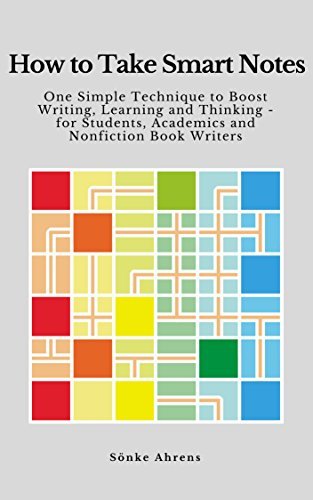
It seems silly at this late date to write a review of one of the most influential books of the last several years, at least among knowledge workers, writers, and software developers. Anyone involved in PKM or BASB (Building a Second Brain) has no doubt already heard of this book and has probably read it (and taken notes on it!).
I read How to Take Smart Notes in 2019, when Amazon recommended it to me. Amazon recommends a lot of books because their years’ of data on my idiosyncratic reading tastes allow them to know what sorts of things I might like to read. I was as astonished to find out how widely read and influential this book (with such an unassuming title!) was as I was in 2014 when a little book I read by Marie Kondo about “tidying up” became a global phenomenon.
Note-taking seems as unlikely a popular book topic as tidying-up. But if you think about it, they probably arrived at the right time for their ideas. With material goods becoming inexpensive, we were apparently drowning in clutter and with the flood of information coming at us, we were lost for a method to keep track of things we wanted to find again.
This book was written for students who need to be keeping track of their research and ideas for writing their papers, but it seems to have struck a chord with a variety of people who aren’t in school at all.
A few things have annoyed me over the years about the increased popularity of the notecard method taught in this book: one of them is the fact that I keep hearing it referred to as a “slip box.” I mean, that’s an ok translation of zettelkasten, I guess. As in, it’s slips of paper in a box. But it takes it out of the realm of being familiar to speakers of American English, who would normally refer to it as a note box or an index card box. As in a card catalog or the little recipe card files our grandmothers had on their kitchen counters.
Americans have been taking notes on index cards for their writing and speeches for as long as we’ve been a country. The method dates back to the Renaissance and has been used by people like Martin Luther King Jr., Ronald Reagan, Joan Rivers, and George Carlin.
In fact, I was taught an index card method in high school, and it appears to be the one that Ryan Holiday learned from his mentor Robert Greene (this popular article predates the publication of How to Take Smart Notes by three years).
So this is the second thing that I’ve found annoying: I’ve seen way too many people act as though Niklas Luhmann invented the concept of taking notes on index cards, which is absurd. What does differentiate the zettlekasten method described in this book from the index card method I learned in high school is this:
Pre-internet “links” between one card and another
One box of note cards for your lifetime instead of for a project
This is how I learned:
For each book you plan to use for writing a paper, create a bibliography index card (nowadays most people use Zotero)
Put the bibliography in alphabetical order by author’s last name
Number the cards
File them in the back of your card box
As you read, take notes on index cards
If the note is a quotation, make sure you put it in quotes and write down the page number, but it’s preferable to put things into your own words
After you’ve written a stack of note cards for a book, flip the entire stack over and write on the back or each card the number of the bibliographic reference
File the note cards in the front of the card box
Then, when you sit down to write, you can sort and regroup the cards into an order that makes sense for the paper you’re writing, while making sure you keep track of which books you got the ideas from.
I did not learn Luhmann’s method of linking the cards with numbers (or bidirectional linking as we now have in Obsidian, Roam Research, Logseq and several other programs).
I also did not learn to keep one card box for everything for all time. Basically the method involved buying a little index card box from an office supply store and using it for the paper you’re currently writing and then archiving those notes and starting from scratch when you write another paper. My card box was much, much smaller than Ryan Holiday’s scrapbooking box (a 4×6 index card is a standard size for printing photos so they fit nicely into photo boxes used by scrapbookers).
Although I’ve been a little annoyed by some of the discussion online about the zettelkasten method, I’ve also been intrigued by all the people who are now working at creating their own. Any book that gets people excited about learning and connecting ideas has a net positive influence on the world.
>To have an undistracted brain to think with and a reliable collection of notes to think in is pretty much all we need.
I’ve actually been spending the last several weeks experimenting with every note-taking app I can get my hands on and now I’m listening to the audiobook version of How to Take Smart Notes as a refresher as I putter away importing notes from the last several years into my new system.
I definitely recommend this book. It’s one of the few books that lives up to the hype and has more to say than you can get from a brief summary.
Usually I prefer to read on my Kindle so that I can export my highlights to a notes app and keep them. When I listen to an audiobook, I don’t have an easy way to keep notes from it, and if I listen at night I’ll probably fall asleep and miss six hours of it.
But sometimes an audiobook is the right choice. Celebrity memoirs are a great example. Usually you’re interested in the memoir because you’re already familiar with the celebrity, whether you’d consider yourself a fan or not. Audiobooks allow the memoirist to tell their story in their own voice, which often makes them better than the ebook or hardcover version.
So it’s no surprise that four of my favorite audiobooks from the past year have been celebrity memoirs.
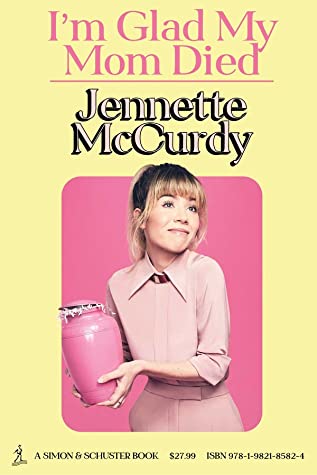
I’m Glad My Mom Died (Jennette McCurdy)
This is one that my son was begging me to read for months when it came out. He’d grown up watching iCarly but he’s not much of a reader himself but he still recommended this one.
He was right. I listened to this in one afternoon and found it really powerful. I don’t know what was wrong with Jennette’s mom, but she definitely had issues. This was an example of a memoir being well-written and deeply thought through.
I take a longer look at the words on her headstone. Brave, kind, loyal, sweet, loving, graceful, strong, thoughtful, funny, genuine, hopeful, playful, insightful, and on and on… Was she, though? Was she any of those things? The words make me angry. I can’t look at them any longer. Why do we romanticize the dead? Why can’t we be honest about them?
Leslie F*cking Jones (Leslie Jones)
This is a perfect example of a book that works better as an audiobook. With a comedian, tone of voice is a big part of their communication. Plus, there’s an introduction and occasional commentary by Chris Rock, and you get to hear it in his own voice as well. This is conversational and makes it feel like Leslie Jones is your new bestie.
Some of the stories about my childhood is vague, because a bitch is 55 and I’ve smoked a lot of weed.
Greenlights (Matthew McConaughey)
I don’t even know how to describe Greenlights. Matthew McConaughey has been keeping a journal for decades and here he digs deep into it to share some truly bizarre memories and rambling thoughts about just about everything. I haven’t browsed the physical book so I don’t know what the layout looks like but I can’t imagine reading this in a traditional form. It’s full of asides and jokes and him laughing at his own jokes and occasionally shouting out, “Greenlight!!”
Catching greenlights is about skill: intent, context, consideration, endurance, anticipation, resilience, speed, and discipline. We can catch more greenlights by simply identifying where the red lights are in our life, and then change course to hit fewer of them.
All My Knotted-Up Life (Beth Moore)
I think I would have read this book as soon as it was released but I waited a bit for a superficial reason: I wasn’t a fan of the title. She explains the title right away but it’s still just not my favorite. The book, however, is great.
I left Christianity a long, long time ago when I was fresh out of college. I haven’t followed most Christian authors over the years (though I’ll read just about anything and sometimes this includes books about Christianity). One author in the Bible study genre that I always really loved was Beth Moore. I’d always imagined that if I’d had a Bible study teacher like her, a church mentor like her, even a friend or mom like her, I would have stayed in the church and probably become a Bible study teacher myself.
If the average Christian was anything like Beth Moore, most of us who left may have stayed.
I guess that’s why she was banished from the Southern Baptist denomination and public figures have called her life’s work “demonic.”
Sigh.
Of course someone who led and encouraged so many women was due to be taken down by the church leadership. Women are supposed to sit down and shut up, remember? Though Beth remained a Christian and now attends services at an Episcopalian church, her experience is a vivid reminder of why I wouldn’t want to go back to church. Ever.
(That’s not all that her book is about. It’s a full memoir with that being the part at the end. But it was the part that upset me the most).
It has been my observation that racism and sexism have an uncanny way of showing up together, like two fists on one body. The common denominator was clear as a bell from where I sat. It was superiority. I spoke out specifically to my own Southern Baptist world because I believed.
Beth deserves to speak a second quote.
All this time, I’d accepted the rampant sexism because I thought it was about Scripture. What I was watching in the wake of the report, however, did not appear to be a whit about Scripture, nor did it evidence fruit of the Holy Spirit, as far as I could discern. In my estimation, this thing playing out in front of the world was about power. This was about control. This was about the boys’ club.
How the Internet Happened (Brian McCullough)
Finally, I get to the only non-memoir audiobook on my list. This is not a memoir, it’s … a history of the internet. That’s totally different, because the internet didn’t write its own story. Brian McCullough did.
When I was in college, in the stone ages of 1993-97, the internet was in the process of going from something fringe to something BIG. It was at approximately the place that AI has been in the 2020s. In 1993, only a few people at Ohio State even knew the university had issued us email accounts. None of my roommates owned a computer (neither did I — I had a word processor by Brother than could hold documents of up to 25 pages). If we needed to use a computer, we spent some time in a place called the Computer Lab. By 1997, every dorm room had computers and they were all connected to the internet.
I was a telecommunications major, and I would leave my classes and excitedly tell my friends all the incredible things I was learning, only to be told that none of it was possible. It was like I was majoring in science fiction.
Most of my friends rented movies each weekend by going to Blockbuster and choosing a VHS tape. I knew one technophile who had an expensive laser disc player. Movies were on discs larger than dinner plates and the disc needed to be changed halfway through. When I told him that they were going to start putting movies on discs the size of CDs, he mansplained to me that a CD is not large enough to hold as much information as a movie contains. If people were skeptical that DVDs were possible, how would anyone believe that we’d be streaming movies on our phones? People were already doubting that anyone would want the news to be online because they liked holding a newpaper in their hand while they drank their coffee.
How the Internet Happened is the story of the last thirty years. We’ve all lived through some of it, some of us have lived through all of it, but sometimes it’s mind-boggling to step back and take a look at the history of it. This book discusses the origins of internet browsers, search engines, ecommerce, Wikipedia, YouTube, and the handheld devices we all use now.
Whether it’s a story you’re intimately familiar with or only vaguely knowledgeable about, if you love the internet, you’ll probably be fascinated by this book.
Silicon Valley has always been equal parts egghead libertarianism and acid-tinged hippie romanticism. Both of these worldviews mesh quite well actually when it comes to believing that technology can be used to better mankind and free it from all manner of oppression, repression and just everyday drudgery. The Internet was another in a long line of technological miracles that many believed would elevate minds and free souls from all sorts of impediments. For the libertarians the Internet was great because it had few rules and no governance. For the hippies, the Internet promised free expression and a democratization of ideas.
So those are some of my favorite audiobooks that I’ve listened to recently. What are some of yours? Recommend them in the comments. I’m always looking for something new to listen to.
Finish: Give Yourself the Gift of Done by Jon Acuff
This book really found me where I live. There are a lot of books about goals and goal-setting, but this is the first one that really nailed why I wasn’t meeting my goals.
In Finish, Jon Acuff discusses the most important day of the goal. Not day one. We’ve all gotten off to a great start. I’ve had so many fantastic day ones.
No, the dangerous day is The Day After Perfect. I’ve never heard anyone talk about the day after perfect before, but I’ve been there many times. We were going to go to the gym every day but we missed yesterday, so what do we do now? We were going to write over 1000 words each day of NaNoWriMo but we were too busy yesterday and now we’re already behind and I guess we failed again. We were going to get this project done in a week but now it’s day eight and we didn’t meet our goal so I guess we failed and there’s no reason to keep working on it, right? Wrong.
The day after perfect isn’t the only place this book made me feel seen. It also called me out for my Hiding Places and Noble Obstacles.
What’s a hiding place?
A hiding place is the safe place you go to hide from your fear of messing up. It’s the task that lets you get your perfectionism fix by making you feel successful even as you avoid your goal.
Yep, I’ve got those. What’s a noble obstacle?
A noble obstacle is what perfectionism throws at you next if you deal with the hiding places. It’s the Very Good Reason you cannot pursue your goal.
Yep, I’ve got those too. They usually look like the pile of homework I give myself, like I have to read every cookbook about a cuisine or diet before I make the first week’s menu. I want to write a book about a topic but first I have to read every book in existence that’s already been written about the topic. I’ll get to my goal, I just have to get through this list of preliminary tasks first.
At the heart of it, a noble obstacle is an attempt to make your goal harder than it has to be so you don’t have to finish, but can still look respectable.
Hmm. I feel called out.
Acuff also helps you figure out your Secret Rules and rewrite them. He has tools and tricks for getting past every way you hold yourself back. He warns you, not only about the Day After Perfect, but about it’s evil twin as you approach completion of your goal: The Day Before Done.
You fought through the day after perfect. You cut your goal in half. You killed your cuckoos. You made sure your goal is fun. You are inches away from finished and perfectionism knows it. It only has one last chance to wreck the whole thing, one last opportunity to topple the entire goal.
There are so many helpful parts of this book, tips I want to remember, strategies I want to use. But the most important sentence in the book, for me, was this:
Chronic starters can become consistent finishers. We can finish.
We can finish. Sometimes if we’ve started a lot of things we stop believing in our ability to finish. But we can learn to finish and we can become consistent finishers.
Refuse to Choose: Use All of Your Interests, Passions, and Hobbies to Create the Life and Career of Your Dreams by Barbara Sher
This is one of my favorite books of all time. I read it years before I even knew I had ADHD and I still browse through it periodically. Recently I listened to the audiobook version read by Pam Ward.
Barbara Sher was a practical author who wanted people to achieve their dreams. She wrote Wishcraft: How to Get What You Really Want, which was full of tools to help people set goals and nail them. But some people didn’t know what goals to set, so she wrote I Could Do Anything If I Only Knew What It Was to help people discover what they really want. Some people thought they were too old to achieve their goals, so she wrote It’s Only Too Late if You Don’t Start Now.
She wrote Refuse to Choose! in response to the thousands of responses she received from people who had read I Could Do Anything and saw a section where she described her concept of Scanners:
The people who wrote me were unbelievably grateful to hear themselves described in positive terms — usually for the first time. For years they had struggled to understand why they were so different from everyone they knew. They had spent years of their lives bewildered and frustrated …They couldn’t understand why they were unable to find the right careers, and they described the same patterns over and over again: Every interesting career they started soon became intolerably boring. Or they had never even tried one because they couldn’t make up their minds in the first place.
At the time she was writing, there weren’t people going around calling themselves multi-passionate or Renaissance people. People were expected to choose a career path early in life and stick to it for the long haul. There was real angst with people who didn’t know from the time they were a teenager what their One True Interest would be forever and ever. Sher says:
If Scanners didn’t think they should limit themselves to one field, 90 percent of their problems would cease to exist!
She doesn’t just provide encouragement and acknowledgement that you’re not alone (although there’s plenty of both). She provides an entire toolbox full of tools that Scanners can use to manage their lives and interests, achieve their goals, and give themselves credit for the things they’ve already been doing all these years. She has a few dozen tools up her sleeve, with names like “Catalog of Ideas with Potential” and “Interest Index Binder.”
In the second half of the book, she breaks down Scanners into categories based on the styles of people she worked with over the years. Some people pursue a lot of things at once, some pursue one thing after another, and some people cycle around to their favorites again and again. She gives each group a type (serial, sequential) and a name such as Wanderer, Jack-of-All-Trades and High-Speed Indecisive. For each group she has a plan and a list of which tools they tend to get the most benefit from.
An example of one of her tools is called “20 to 30 Three-Ring Binders” and it’s literally a bookshelf full of binders with one per interest. So instead of having a stack of clutter that makes you feel worthless and has you wondering what on earth you’ve even been doing with your time, you have an entire shelf with each of your interests catalogued so you can see what you’ve been up to and, more importantly, jump back into things that got put aside at some point.
Every time you get inspired by a new interest, you reach for a new binder and give that interest a home. When you start feeling stressed because yet another interest has arrived, one you can’t possibly devote yourself to in the way you want to, create a binder for it and put it on the shelf. The relief you feel after doing something this simple will surprise you. But it’s another way of knowing that nothing will be lost and everything will wait for you when you do have the time.
For most of my life I loved tools like binders. Then I moved 2500 miles across the country and I had to sift through and assess the value of every item I owned. What is worth paying to lug across the country? What is worth paying to store until you buy a house (which, in this housing market, seems distant?). Lately I’ve been mostly paperless and I’ve explored a number of digital solutions. One of my dreams is to update some of the tools I’ve learned from this book for some of the apps I’ve been using lately.
If you’re the kind of person who would benefit from this book, you are probably already looking it up on your favorite book site or your library’s website. For me it’s the opposite of the large number of books I’ve read and immediately forgotten over the years. Instead, it’s one of the small number that has stuck with me and made a profound difference in my life.
The Lazy Genius Kitchen: Have What You Need, Use What You Have, and Enjoy It Like Never Before by Kendra Adachi
This is the book I needed and didn’t have years ago. Somehow I always managed to over complicate menu planning, grocery shopping and cooking to the point that it was an impossible task. And we all know what happens when meals become impossible: pizza or another burrito bowl.
Here’s what I was doing in my mind: we have this number of family members who are these ages and genders. They need this many calories per day. I need breakfast, lunch, dinner and snacks for the entire week for each person. And I need it to come in under this dollar amount. Oh, and while I’m at it I should go ahead and plan for the entire year. I’ll just make 52 lists at once and I can repeat it each year.
No wonder I found it overwhelming to the point of impossible. All I had to do was get us something to eat but I complicated it to the point that I’d need a degree in nutrition and to become a master chef, as well as an expert in personal finance and project management.
Oh, and did I mention that you have to eat every day? Several times a day? Forever? It’s not like you can take a two week break to plan a strategy and then do some shopping in preparation for when you start. You have to eat dinner tonight. Even if you move across the country or sprain an ankle or have two funerals to attend in the same week, you still have to figure out dinner tonight and every night. This was the first book in the getting dinner on the table genre that made me feel seen Kendra Adachi says,
Allow me to hold your metaphorical face in my metaphorical hands as I say this: of course you’re exhausted. Of course you are. Life in the kitchen doesn’t provide any breathers to figure out what you’re doing or what you need. Meals just keep coming no matter how much you need them to slow down.
This book walks you through how to figure out what you personally need in your kitchen for your life and your goals. Remember getting your first cookbook and buying the stuff it recommends you have to have and then you end up never using some of it? This book is the antithesis of that, because Adachi knows that you are not a clone of her.
Probably the most helpful part of the book for me was the part on how to prioritize. I now use this in other areas of my life as well. She says,
Any time you need clarity on what matters, ask yourself these three simple questions: 1. What could matter? 2. What does matter? 3. What matters most?
As an example, let’s think about what could matter when you shop for food: price, quality, convenience, selection, experience, sustainability, and if a place has grocery pickup or shopping carts shaped like racecars for your toddler. Those could all be important, right? However, there is no grocery store on earth that can prioritize all those things. None.
Every store has to prioritize something, or it won’t survive. The same is true for you. You have to prioritize. If you try to tend to everything, you’ll tend to nothing—at least not well. You have to drill down to what matters most to you, and the first step is listing all the possibilities.
That’s where I was going wrong. I was trying to prioritize ALL THE THINGS so I could get an A+ in Kitchen. When what I needed to do was figure out how do get something other than French fries into my autistic son and something gluten free for myself.
Adachi advocates a sort of Buddhist middle path between what she calls the Genius Way (that’s when you try to do everything perfectly) and the Lazy Way (when you end up getting fast food delivered again because your genius plans were unsustainable). She describes the Lazy Genius way as being “a genius about the things that matter and lazy about the things that don’t.”
This book literally has a whopping 358 highlights on my Kindle because it resonated with me so much. I really, really needed it. I only wish I’d had it years ago so I could have just relaxed sooner.
It all started in the doctor’s office, chatting with a nurse who was considering buying a Kindle. She hadn’t done much reading for pleasure since nursing school and she was looking forward to reading something that wasn’t related to her job.
“I love my Kindle!” I enthused. “I read on it every morning while I drink my coffee.”
“What are you reading now?” she asked.
“It’s called 21 Lessons for the 21st Century, and I’ve been reading it for the last several days.”
“Sounds fascinating. What’s it about?”
“Uh, well … see … it’s … about … like, I guess some of the challenges or whatever of the upcoming, um, years.”
What. the. heck.
I’d been reading the book for days on end and I couldn’t think of one intelligent sentence to string together about its contents?
When I got home and pulled out my device, I saw that I’d made 140 highlights in this book! Yes, 140 times Yuval Noah Harani said something that struck me as interesting enough to remember later, yet I wasn’t even finished reading the book and already remembered none of it. Ironically, the first highlight said:
In a world deluged by irrelevant information, clarity is power.
Nor was this an isolated incident. It’s not like I remembered the main points of every other book I’d ever read and this book alone failed to stick in my mind. It was much worse than that.
When I joined Readwise and imported my Kindle highlights from the last decade, I had “read” more than a thousand books and I barely remembered most of them. Some I’m certain I only read the introduction or first few chapters. Others it was clear I’d spent a good deal of time with but I still hadn’t retained much. There were probably ten that had made a real impression on me, though I may not be able to articulate that impression clearly. It was more like a vague sense that I enjoyed my time with the book and thought of it fondly.
So, was I actually reading every morning while I drink my coffee? Or was I just drowsing in my reading chair, hypnotically staring at the screen?
In the time since, I’ve read books about zettelkasten and commonplace books and building a second brain and taking smart notes. I’ve watched YouTube videos where people show off their elaborate systems for never forgetting anything. I’ve tried notebooks and journals and apps (so many apps!).
In the last few years I’ve learned what works for me, what frustrates me, what doesn’t work for me but I wish it did, and what was a complete waste of time (and, often, money!).
If you’re looking to get more out of your notes and reading and to leverage your thoughts into projects instead of something you forget about five minutes later, you’re in the right place. I want to help you manage the information in your life so that it’s useful to you.
Opening your notes shouldn’t feel like opening one of those sitcom closets where you get buried under a pile of clutter and a soccer ball bounces off your head.



 Deana Birks